We can make a contractor site feel specific before a real client gives us a photo library or years of case studies.
Contractor website demos
Sample contractor sites built to sell.
These builds show how Iron Canyon thinks through contractor websites: service-specific pages, mobile click-to-call design, proof placement, local SEO structure, and honest copy that does not invent fake wins.
Fictional companies. Real sales purpose. The point is to show structure, taste, and decision-making without pretending these are client case studies.

Roofing, HVAC, and plumbing buyers need different pages, proof, and calls to action.
The first screen should make the next step obvious, especially for urgent home-service visitors.
No fake reviews, fake rankings, fake guarantees, or invented outcomes.
Three sample builds
Open the demo website first. Use the strategy breakdown only when you want to explain the page map, contact flow, and monthly growth plan behind it.
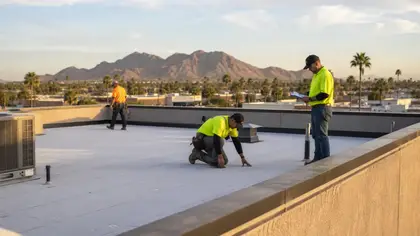
Desert Ridge Roofing
Inspection calls, storm damage, replacement quotes, and roof repair trust signals.
RoofingInspection CTAStorm page

Copper State Comfort
AC repair urgency, replacement estimates, financing proof, and maintenance plans.
HVACRepair flowMonthly plan
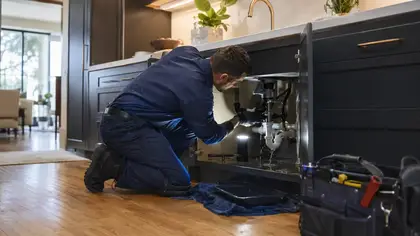
Valleyline Plumbing
Emergency calls, water heater leads, drain cleaning pages, and short mobile forms.
PlumbingEmergency CTAGBP cleanup
What a build includes
This is the practical sales promise: not just a prettier homepage, but the decisions a contractor site needs before launch.
01
Homepage direction
Above-the-fold message, buyer paths, CTA hierarchy, proof placement, and service emphasis.
02
Service page structure
Separate content for urgent repair, planned replacement, maintenance, and high-value services.
03
Local SEO map
Which service and city pages are worth building, and which thin pages should be avoided.
04
Quote and call buttons
Mobile CTA, form fields, phone visibility, urgency routing, and what happens after contact.
05
Proof plan
Where job photos, licenses, reviews, warranties, process notes, and team details should appear.
06
Launch checks
Speed, accessibility, broken links, forms, schema, metadata, sitemap, robots, and mobile QA.
The difference
Generic contractor sites make every visitor do the same work.
A stronger site separates the visitor paths before design starts. A roof leak, an AC replacement, and a water-heater issue need different proof, different copy, and different CTAs.
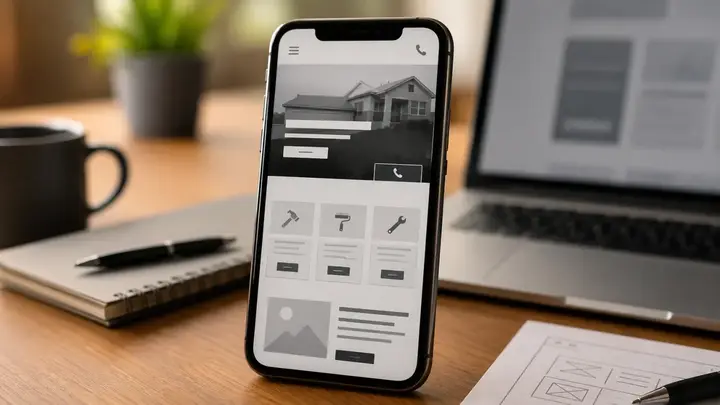
Proof assets we would ask for
The demos stay honest because they separate design placeholders from real business proof. On a paid build, these are the assets that make the site feel owned by the contractor instead of generated.
Job photo set
Before, during, and after photos with city, service type, problem, and what the crew actually fixed.
Process details
What happens after someone calls, how estimates work, what is included, and what is not included.
Trust facts
License, insurance, service policy, warranty language, equipment brands, team photos, and review themes that are true.
Before and after the thinking
This is the shift we are selling. A good-looking site is not enough if the structure is still generic.
Generic contractor website
- One broad services page for everything.
- Hero says “quality service” without a concrete offer.
- Same CTA for emergency, quote, and maintenance visitors.
- Proof hidden below the fold or replaced with vague claims.
- Thin SEO pages that sound copied across trades and cities.
Iron Canyon direction
- Service pages match how people actually buy.
- Hero identifies trade, buyer, urgency, and next action.
- Mobile visitors can call or request the right help quickly.
- Real proof slots are planned before fake claims creep in.
- Local SEO pages are only built where useful content exists.
How we avoid fake-looking sites
The process has to force specificity. Otherwise every demo starts to look like the same AI-generated contractor template.
Business interview
Understand services, service area, profit centers, constraints, proof, and what the company actually wants.
Page decisions first
Map homepage, service pages, local pages, CTAs, proof, and form fields before polishing visuals.
Visual QA
Check desktop, mobile, line breaks, card alignment, contrast, images, overflow, and sticky CTA behavior.
Honesty review
Remove unsupported claims, guarantees, fake authority, and language that could lose money or trust.
Next step
Bring the business context. We map the first version.
Thirty minutes should give enough direction to build a sharper first pass: trade, service area, best jobs, bad-fit jobs, proof available, monthly offer, and how leads should come in.