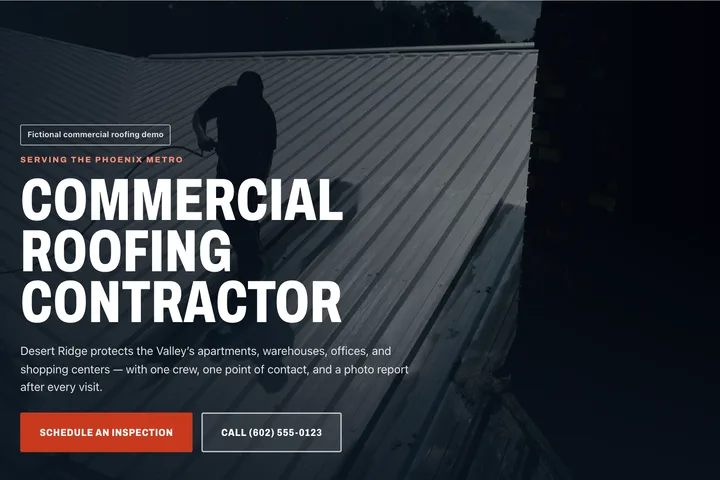
Roofing demo
Desert Ridge Roofing
Commercial inspection requests, leak documentation, roof systems, and maintenance plans.
Contractor website demos
These builds show how Iron Canyon Co thinks through contractor websites: service-specific pages, mobile click-to-call design, proof placement, local SEO structure, and copy tailored to each trade.
Fictional companies, clearly labeled as demos. They show structure, design, and decision-making, not client results.
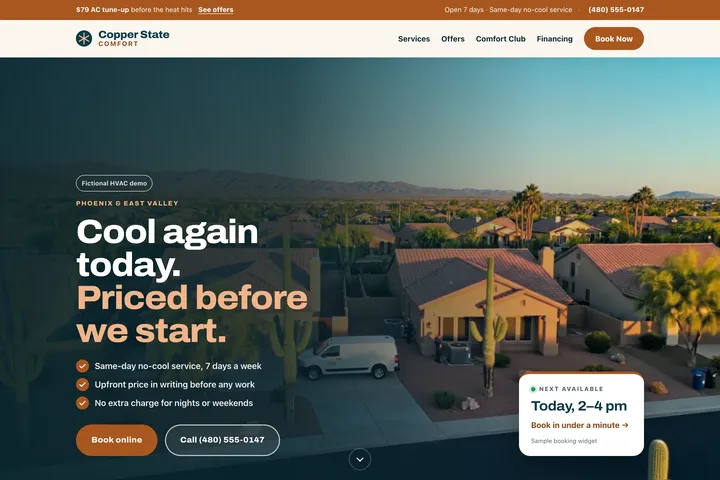
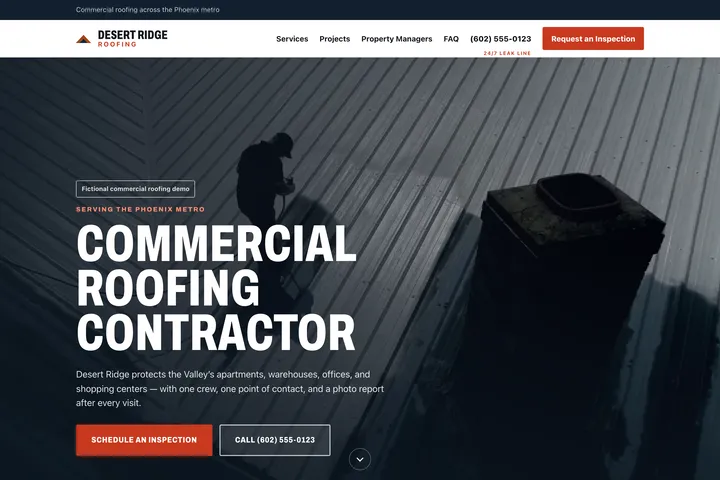
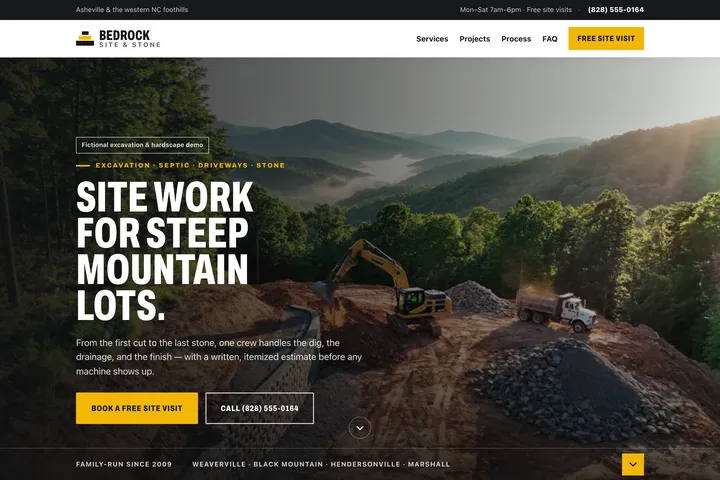
Each demo is built the way a real contractor site would be, for one trade and one kind of customer.
Fictional demos
Open the demo website first. Use the strategy breakdown only when you want to explain the page map and contact flow behind it.
Roofing demo
Commercial inspection requests, leak documentation, roof systems, and maintenance plans.
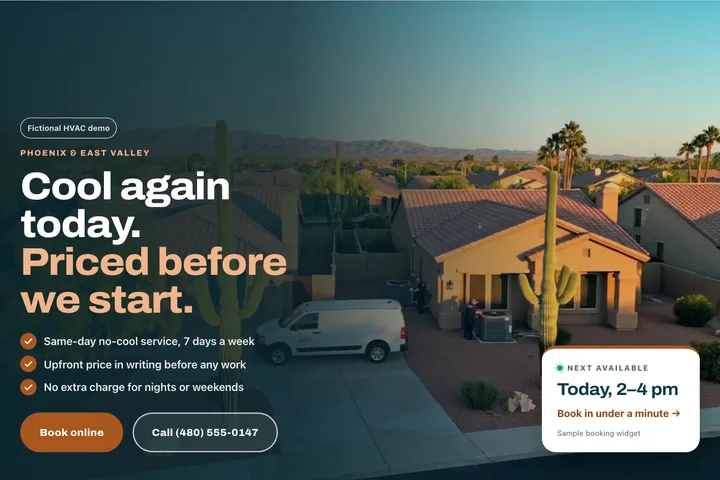
HVAC demo
No-cool repair calls, written replacement estimates, and maintenance plans for Phoenix homes.
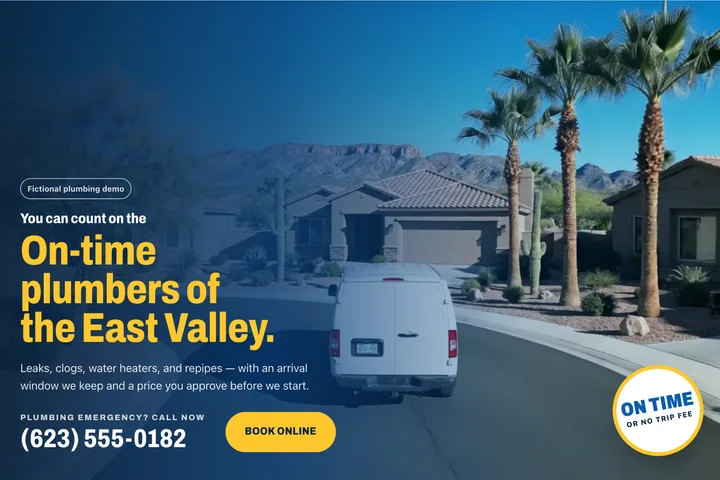
Plumbing demo
Emergency leak calls, water heaters, drain cleaning, and a short request form.
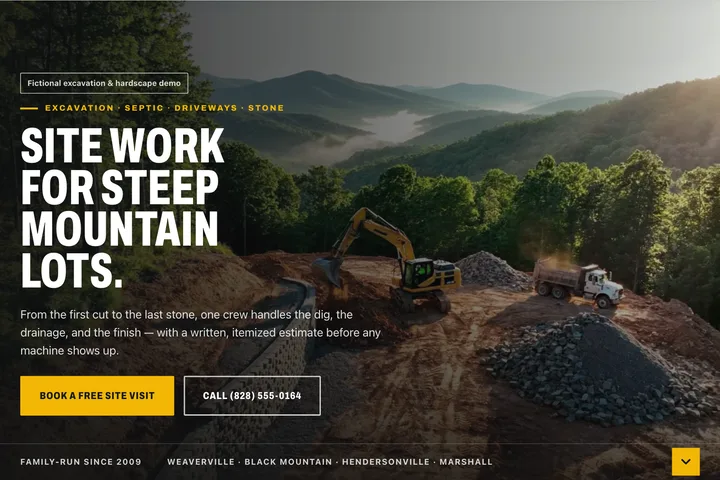
Site work demo
Free site visits, excavation, septic and utility lines, driveways and access roads, retaining walls, and patios.
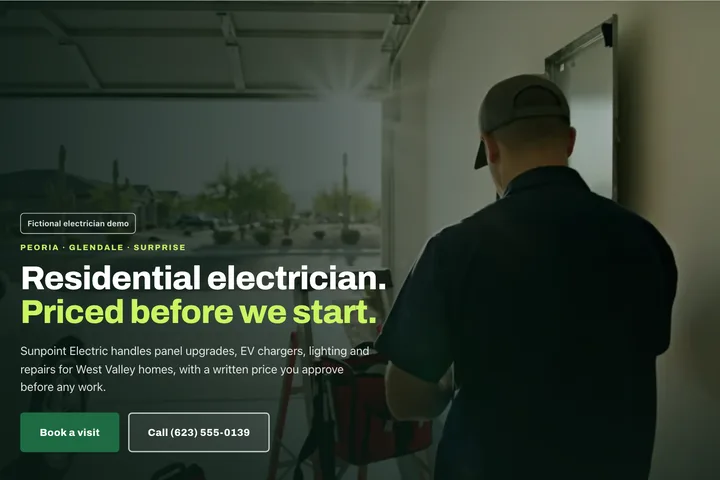
Electrician demo
Panel upgrades, EV chargers, lighting, and repairs, with a written price before any work.
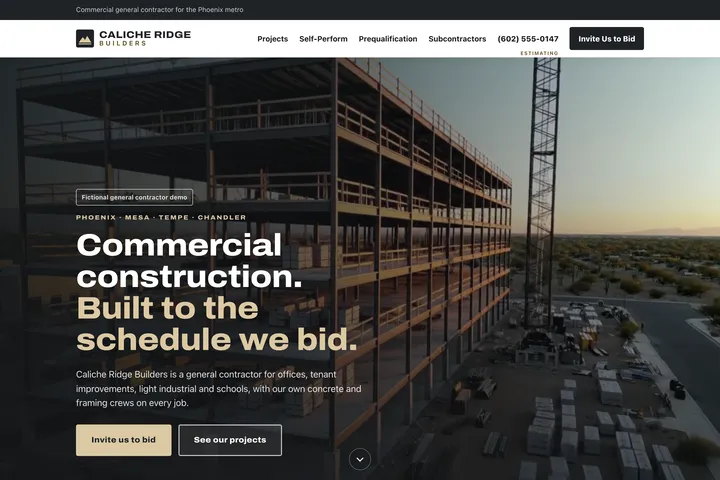
General contractor demo
Commercial projects with real facts, prequalification, an invitation to bid, and a subcontractor bid list.
Don’t see your trade? We build the same way for painters, concrete, pools and other trades. Talk about your trade
Client work
Paid work for a New York commercial real estate company, live today: a company site and a dedicated leasing site for each building. Not contractor sites, but the same approach: clear pages, the details buyers need, and an easy way to make contact. How we built them.
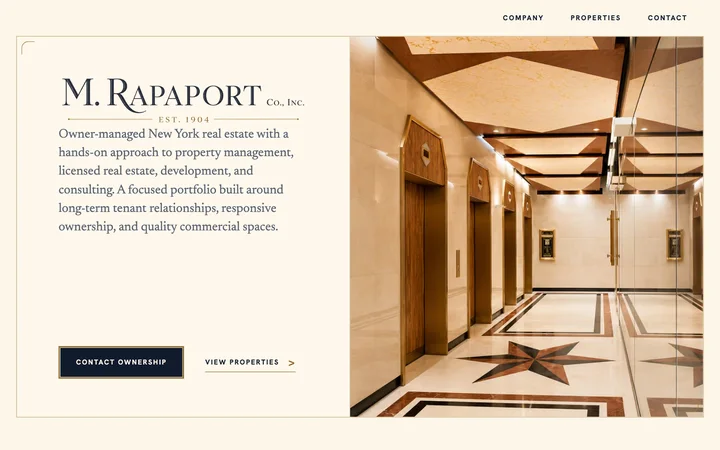
Client work · Company site
Company site for an owner-managed New York real estate firm founded in 1904: the portfolio, services, and direct contact for leasing and management.
Visit mrapaport.com (opens in a new tab)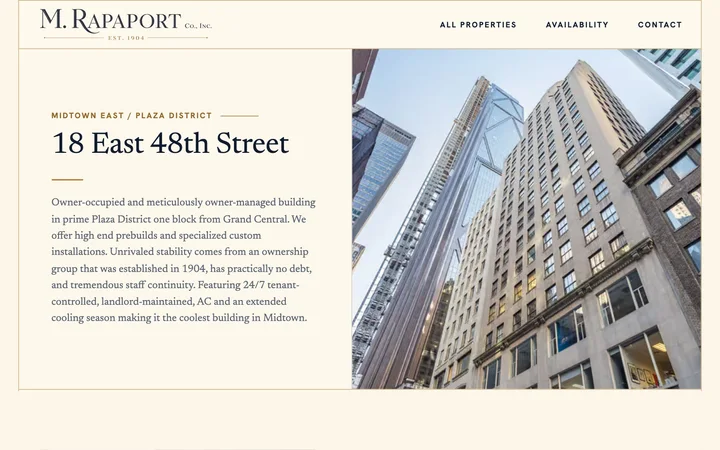
Client work · Leasing site
A leasing site for a Midtown East office building: current availability by floor, size and condition, leasing PDFs, concept test-fits, and photo galleries.
Visit 18e48.com (opens in a new tab)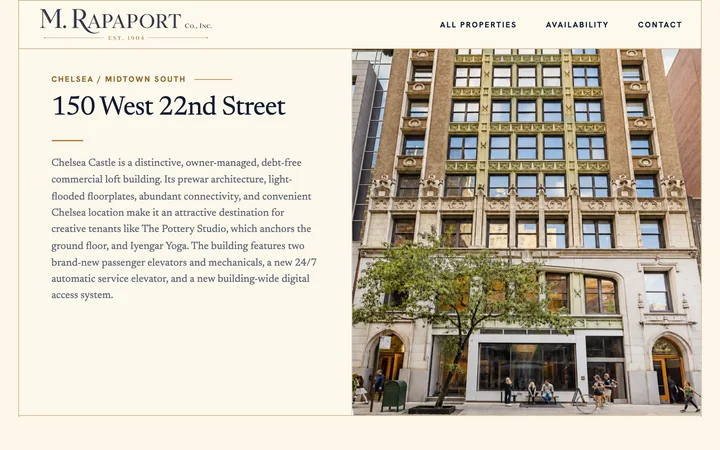
Client work · Leasing site
A leasing site for a Chelsea loft building: the full-floor availability, floor plan and flyer, and finish photos.
Visit 150w22.com (opens in a new tab)The decisions a contractor site needs before launch.
Above-the-fold message, buyer paths, button priorities, proof placement, and service emphasis.
Separate content for urgent repair, planned replacement, maintenance, and high‑value services.
Which service and city pages are worth building, and which thin pages should be avoided.
Mobile call buttons, form fields, phone visibility, urgency routing, and what happens after contact.
Where job photos, licenses, reviews, warranties, process notes, and team details should appear.
Speed, accessibility, broken links, forms, structured data, page titles, sitemap, robots, and mobile QA.
The difference
A stronger site separates the visitor paths before design starts. A roof leak, an AC replacement, and a water-heater issue need different proof, different copy, and different calls to action.
Review the Roofing Demo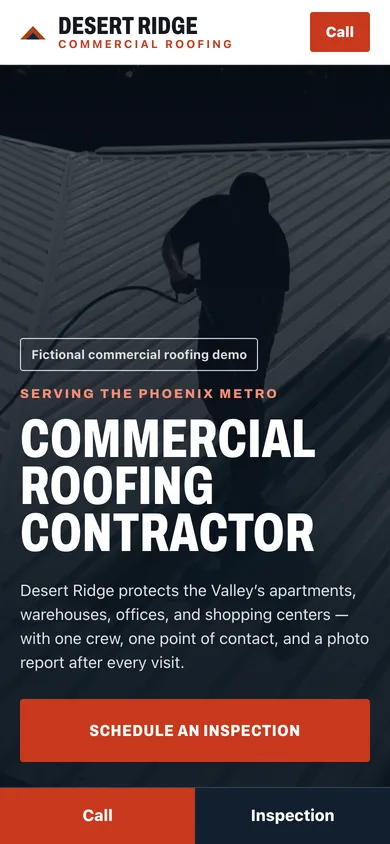
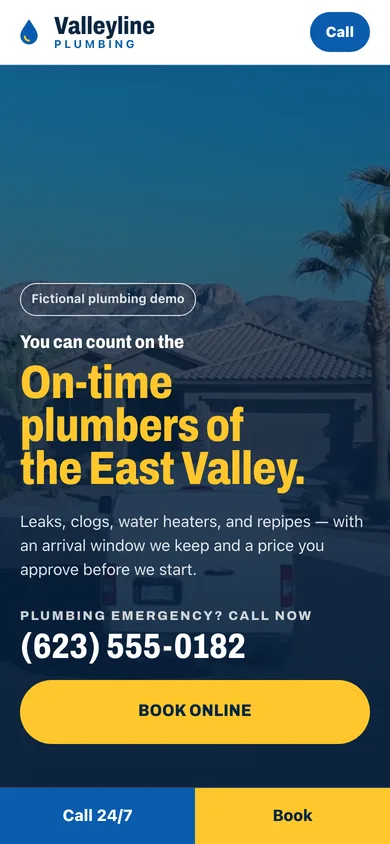
Proof assets
The demos stay honest because they separate design placeholders from real business proof. On a paid build, these are the assets that make the site feel owned by the contractor instead of generated.

Before, during, and after photos with city, service type, problem, and what the crew actually fixed.
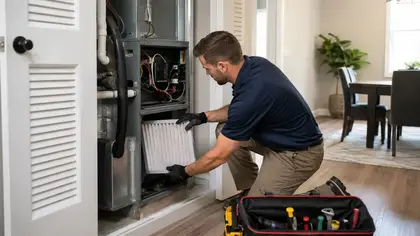
What happens after someone calls, how estimates work, what is included, and what is not included.
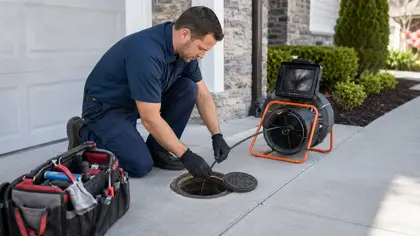
License, insurance, service policy, warranty language, equipment brands, team photos, and review themes that are true.
Illustrative images. On a paid build, these are the contractor's own photos and details.
A good-looking site is not enough if the structure is still generic. Here is the difference.
Every build starts from the business itself, so no two contractor sites end up looking the same.
Understand services, service area, profit centers, constraints, proof, and what the company actually wants.
Map homepage, service pages, local pages, buttons, proof, and form fields before polishing visuals.
Check desktop, mobile, line breaks, card alignment, contrast, images, overflow, and sticky call button behavior.
Check business facts and use only claims the client can support.
Fictional demonstration companies, not client case studies. Features and examples on this page are possible project options. Your accepted quote defines the included pages, features, and any ongoing work. Website builds include two revision rounds, documented handoff, and a 30-day workmanship guarantee that covers defects, not a change of preference. Ongoing care is optional; domain, hosting, and paid tools are separately priced.
A short email with your trade, service area, best and worst-fit jobs, the proof you have and how you want leads to come in is enough for a sharper first pass.